
01 · Production services
Production, kept flowing.
We close the pressure gap that holds wells back, oil and gas alike, with proven multiphase pumping, power, people and process, packaged as one system.
The pilot: pump, power and controls on one trailer, on a producing well.
Restore. Prevent. Test.
Restore.
Loaded? Shut-in? We bring it back.
Everything it takes to bring a well back online. We tie in, draw the pressure down, and move the full wellstream, gas and liquids together, into the line, until the well is flowing against the sales line again.
Prevent.
Stay ahead of the next shut-in.
Keeping wells flowing before loading turns into lost production. The unit stays on the well, continuously unloading liquids, so the well is never opened to atmosphere and stays ahead of the next shut-in.
Test.
Know what the well can do.
See how a well reacts under drawdown: full-wellstream transfer, run without venting. You leave with the measured data to decide the well’s next step.
The conventional fix, a manual blowdown, restores a loaded well for weeks, then the well loads up and dies again. It's temporary, labour-heavy, and leaves real production in the ground. Restore brings the well back without the blowdown; Prevent ends the cycle that makes the next one necessary; Test proves the well without opening it to atmosphere.
Why wells stop producing
Wells rarely run dry. They lose to pressure.
Between the reservoir and the sales line, pressure is what takes production down: gas wells load up with liquids, oil wells fight casing pressure that suppresses inflow, and every well competes against the line as formation pressure declines.
Mbrace's multiphase pumps lift the liquid directly at the wellhead, easing the backpressure the well has to push against. The well stays open against backpressure and decline, with no shut-in, and the production that would have been lost comes back.
Liquid loading. A liquid column builds in the wellbore and chokes off flow until the well dies.
Line backpressure. A high-pressure gathering system holds weaker wells back from the line.
High casing pressure. Casing gas backpressure suppresses inflow and holds back oil production.
Costly workarounds. Shut-ins, swabbing and venting: production lost either way.
The pressure gap. The space between what the well can deliver and what the line demands. Close it, and the production comes back.
The Mbrace Field Unit
Not just a pump.
Everything it takes to close the gap: four pieces working as one, with a software layer on top. Deployed and run as one package by Mbrace crews: you get the production back.
Pump
A proven, field-deployed multiphase pump, sized to the well.
Power
Grid, on-site, or an Mbrace-supplied genset, with gas-drive in development.
People
Operators who deploy, run and maintain it. Skilled crews, not equipment dropped on a lease.
Process
Design, HAZOP and install, handled: a complete, issued-for-approval process package.
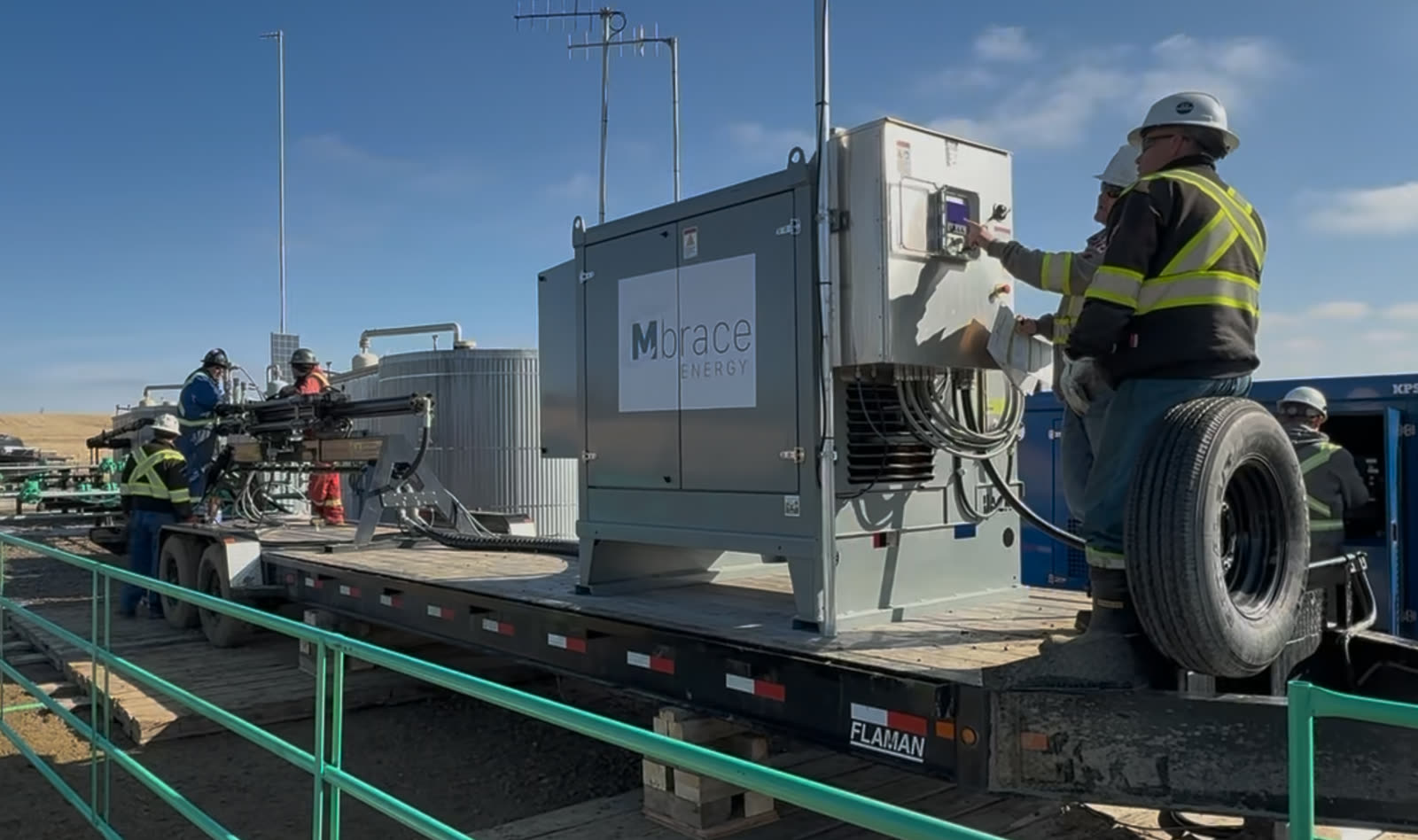
The Mbrace Field Unit on a producing well: unit and power on one trailer, operators at the panel.
The software layer that ties it together is the Mbrace platform: live telemetry, optimization and reporting across every unit and well.
What we run
Built around proven equipment.
We don't build the pump. We package field-proven multiphase equipment and build, configure and operate the turnkey service around it, agnostic to the pump maker. The service is multiphase flowline pressure management: the unit continuously draws down casing, tubing or flowline pressure and moves the full wellstream, gas and liquids together, into the line.
Operating envelope
Electric drive
Sized to well and duty
Toward zero
Suction drawdown
In series
Units stack differential
In parallel
Units scale with volume
Gas + liquids
No separation
Ties in off the casing, the tubing or the flowline, on a rig mat beside the battery or in-line, with no changes to separation or buried pipelines.
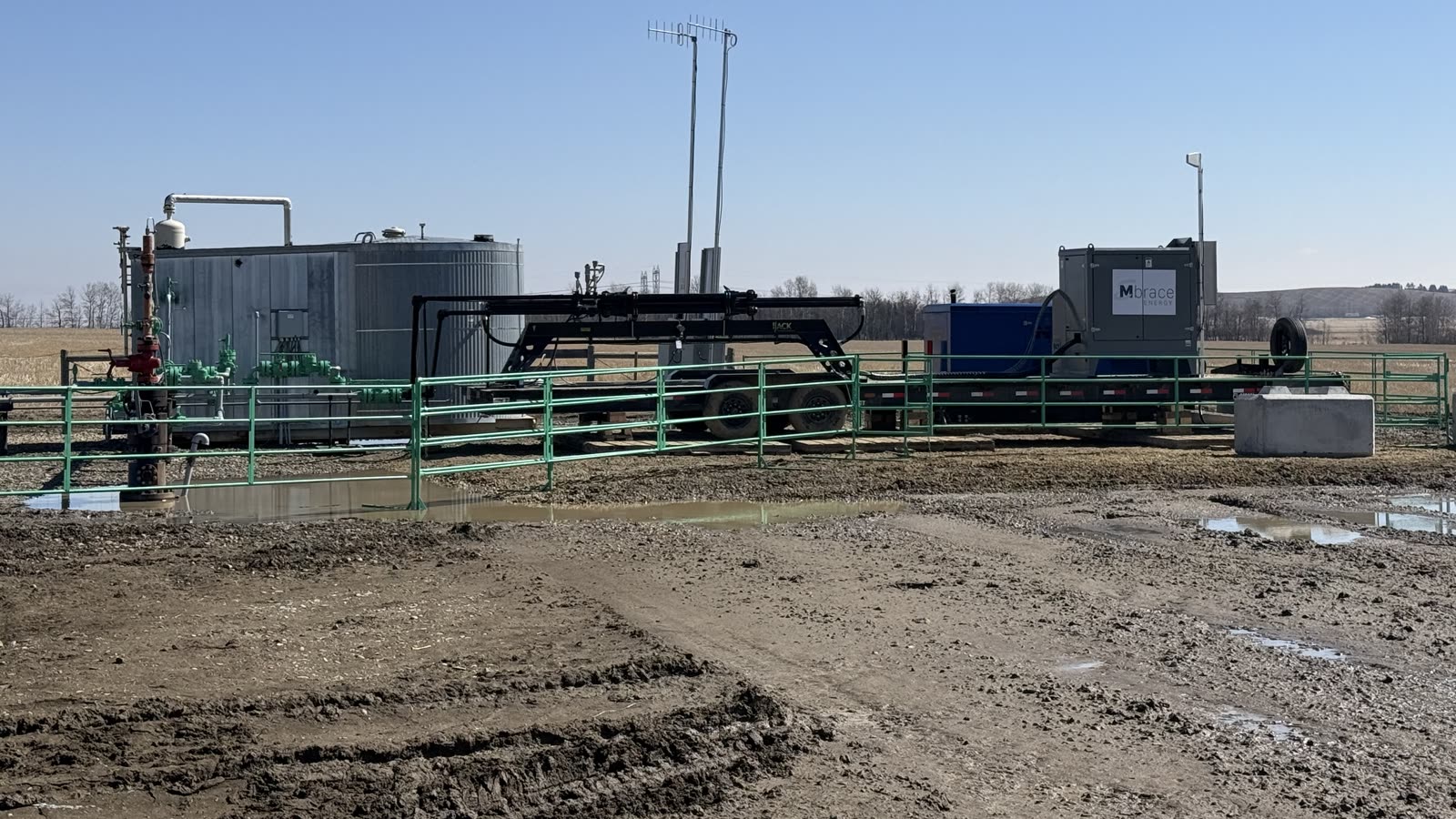
The whole package on a producing lease: wellhead, unit and power, inside the fence.
Applications
Where it goes to work.
One field unit, applied wherever pressure and liquids are holding production back, gas or oil, a single well today or a field over time.
Liquid-loaded tubing. Continuous unloading where a liquid column is killing flow.
Competing into the line. Boosting a weak well into a high-pressure gathering system.
Reservoir decline. Holding declining wells open and flowing.
Offset frac hits. Recovering wells loaded or backed off by adjacent fracs.
Casing drawdown & lift. Lowering casing pressure to lift more oil and optimize plungers, pumps and gas lift.
Well testing & flowback. Drawdown and full-wellstream transfer for tests and flowback.
How it's delivered
Two ways to take it.
Per-job vent & test
Call-out service
One well, one job. We mobilize a unit for a ventless blowdown or a well test, run the work, and demobilize when the well is back on line.
Rented & operated
Managed service
Mbrace owns, runs and maintains the unit on site. The fastest path to production, with nothing on your books.
Every package includes
Multiphase unit
Power package
Controls & automation
On-skid piping & flowline tie-in
Experienced field operators
Scheduled & on-call maintenance
Proven in the field
The Tourmaline pilot.
A live deployment on a producing well: a multiphase compression unit with 30 hp hydraulics, mounted on a 36-ft trailer, dual-fuel gas supply, and an ANSI 300 spec break. The goals: prove 100% vent-free liquid unloading, enhance the existing plunger lift, keep the well from loading, boost production, and reduce operator time on site.
Ventless unloading. 100% of liquid unloading achieved without venting.
Well restored. The plunger retrieved from a loaded well and production restarted, eliminating a wireline or swabbing call.
Software optimization. A plunger optimization identified in the software and implemented on the well.
SCADA integration. Virtual integration into Cygnet SCADA/RTU, with full remote access, control and operation.
Fully off-grid. A 50 kW natural-gas genset running without a load bank, with no grid tie-in required.
Independently reviewed. A third-party HAZOP by SDS Consulting and a noise impact study.
Proved on one well: no venting, no wireline, no swabbing, run remotely on the operator's existing SCADA, with power that comes with it. The same package is ready for your well.
See what Restore and Prevent look like on your wells.
Talk to the team